Action Alert: Cormorant Relief Act (H.R. 2293) Passes House – Contact Your Senators Today!
Major Legislative Milestone Reached
Action Alert: Cormorant Relief Act (H.R. 2293) Passes House – Contact Your Senators Today!
Major Legislative Milestone Reached The National Aquaculture Association is pleased to inform its members that the Cormorant Relief Act of 2025 (H.R. 2293), introduced by Representative Mike Ezell (MS-4), has successfully passed through the U.S. House of Representatives on December 9, 2025. This critical piece of legislation is a significant step forward in protecting the American aquaculture industry from the devastating economic impacts of cormorant depredation.
What the Cormorant Relief Act Does
The Act re-establishes the highly successful Aquaculture Depredation Order which existed from 1998 to 2016 under the authority of the Migratory Bird Treaty Act, allowing more than 1,5000 fish farms to combat millions of dollars in annual losses from cormorants.
Key provisions include:
Restores Depredation Order: It restores the flexibility aquaculture producers previously held before a 2016 court ruling vacated the original order due to USFWS NEPA compliance issues associated with the accompanying Public Depredation Order. It does not reinstate the Public Depredation Order.
Expands Coverage: The bill extends the original order to include 12 additional states
Empowers Local Managers: It authorizes private lake and pond managers under the order, providing broader protection for managed water bodies.
Modernizes Requirements: The legislation simplifies compliance with other federal laws and updates recordkeeping and terminology to match current standards.
Reduce Administrative Burdens: Eliminates the need for farm-by-farm permitting and enables a consistent, collaborative approach to depredation management with federal agencies, while still requiring regular farm reporting and oversight.
Why This Bill is Urgent
Bird depredation threatens the viability of aquaculture operations across the country, and the livelihoods of those that depend on aquaculture farms.
Economic Devastation: Research estimates that within the catfish sector alone, costs associated with cormorant predation can rise to $98 million per year. It is estimated that economic impacts likely exceed most estimations, especially for the aquaculture sector as a whole.
Ineffectiveness of Non-Lethal Methods: While farmers use deterrents like pyrotechnics and sirens, these are often expensive, labor-intensive, and only temporarily effective as birds become habituated to the noise.
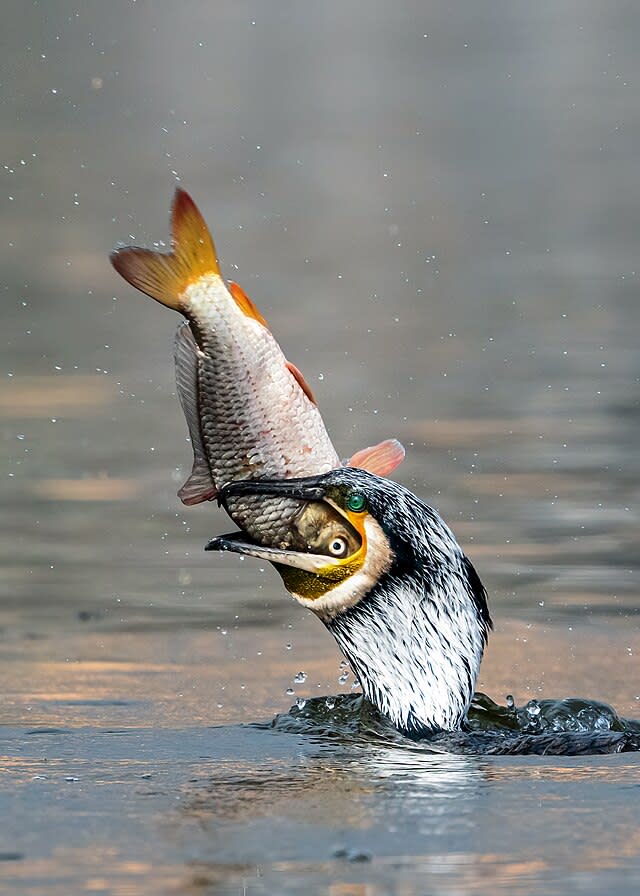
Predation Efficiency: Cormorants are highly efficient predators that can consume a pound of fish daily. Beyond what they eat, they can also injure fish and spread disease, causing indirect mortality to aquaculture operations.
CALL TO ACTION: Engage the Senate
The bill now moves to the Senate, where the companion bill S. 1255, of the same name, is sponsored by Senator Tom Cotton (AR). The NAA encourages members to contact their state’s Senate delegation to ensure this momentum continues.
Please reach out to your Senators and urge them to support H.R. 2293/ S. 1255, the Cormorant Relief Act of 2025. Use the link below to find contact information for your state’s delegation: Find Your Senators Here
When speaking or writing to your Senators, here are some additional talking points that may be helpful:
Improves Management: Aquaculture producers are currently forced to navigate the individual permitting process, which may take more than 5 months to be issued, and are only accessible via an electronic application process. This forces farms to take on considerable operational risk as they wait for their individual permits to be issued or renewed.
Economic Cost: Aquaculture is a vital part of the American food system and unchecked depredation by cormorants directly threatens the supply of locally raised sustainable protein, with cormorant depredation costing just the catfish sector nearly $100 million per year. Cormorant depredation has a substantial economic impact on U.S. aquaculture and threatens the long-term viability and growth of U.S. aquaculture and U.S. sourced seafood.
Proven Strategy: The bill restores a management framework that worked for nearly two decades, before being vacated due to issues unrelated to the Aquaculture Depredation Order. By expanding the order to more states, the bill helps ensure that more of the sector has access to the tools needed to help protect their livelihoods, while also ensuring that the cormorant population is managed under a balanced and data-supported management tool.
Streamline Management: In a time when agencies increasingly operate with limited resources, or reduced staff re-instating the Aquaculture Depredation Order would help reduce administrative burden, reduce delays for growers, provide consistent access to management tools, all while facilitating a collaborative relationship between producers and regulators.